 Spanish
  English
  French
  Turkish
  Russian
 Application of Leaf Filters in the Sodium Silicate Industry
Sodium silicate—also known as water glass—is widely used in industries such as casting, construction materials, detergents, papermaking, refractories, mineral processing, and chemical manufacturing.
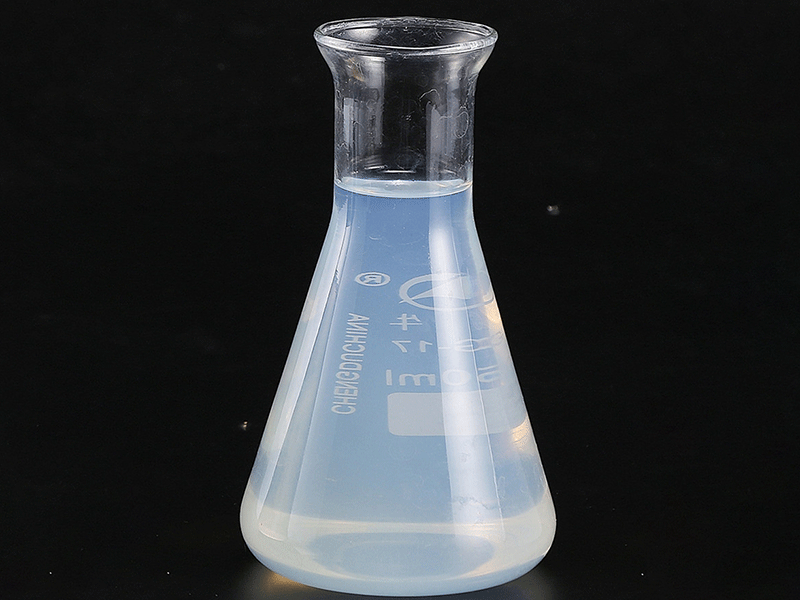
During the production, dissolution, and subsequent storage of sodium silicate, incompletely reacted solid particles, insoluble matter, mechanical impurities, and fine suspended solids may be introduced. Failure to effectively remove these impurities can compromise the transparency and stability of the sodium silicate, as well as the quality of downstream products.
Therefore, clarification and filtration are typically required before the finished sodium silicate enters storage tanks or proceeds to subsequent production stages.
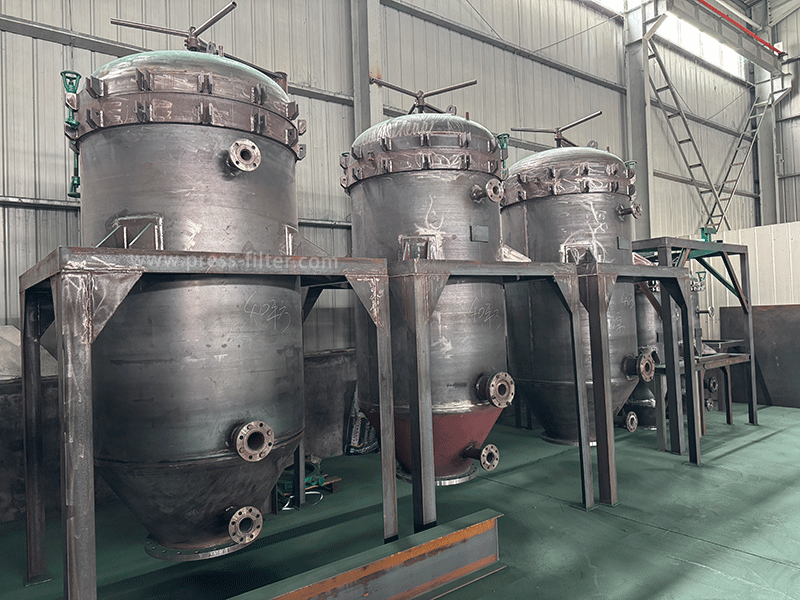
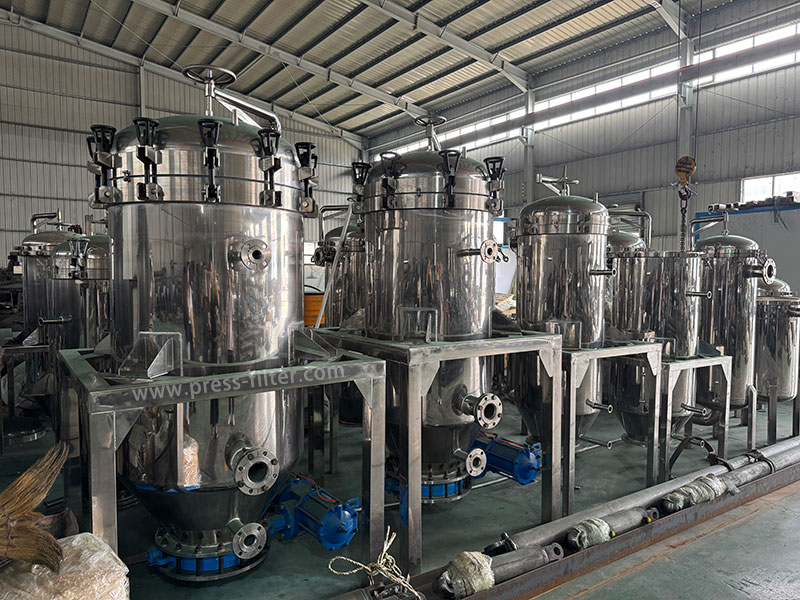
Leaf filters use a closed-system pressure filtration method that effectively separates fine solid impurities from sodium silicate. They offer advantages such as a large filtration area, excellent sealing, and convenient residue discharge, making them well suited to the fine filtration required during sodium silicate production.
Why Does Sodium Silicate Require Fine Filtration?
Although sodium silicate appears to be a homogeneous liquid, in actual production, it often contains a certain amount of insoluble impurities.
These impurities may originate from:
- Insoluble matter in raw materials such as quartz sand and soda ash;
- Solid particles that did not fully dissolve during the reaction process;
- Mechanical impurities generated by equipment and piping;
- Sediment formed during storage;
- Fine suspended particles not fully removed during preceding processing stages.
If filtration is inadequate, sodium silicate products may exhibit issues such as turbidity, sedimentation, or excessive particulate content. Stringent quality standards for filtered sodium silicate are typically required, particularly in applications involving foundry binders, fine chemicals, or those demanding high transparency.
How a Leaf Filter Processes Water Glass
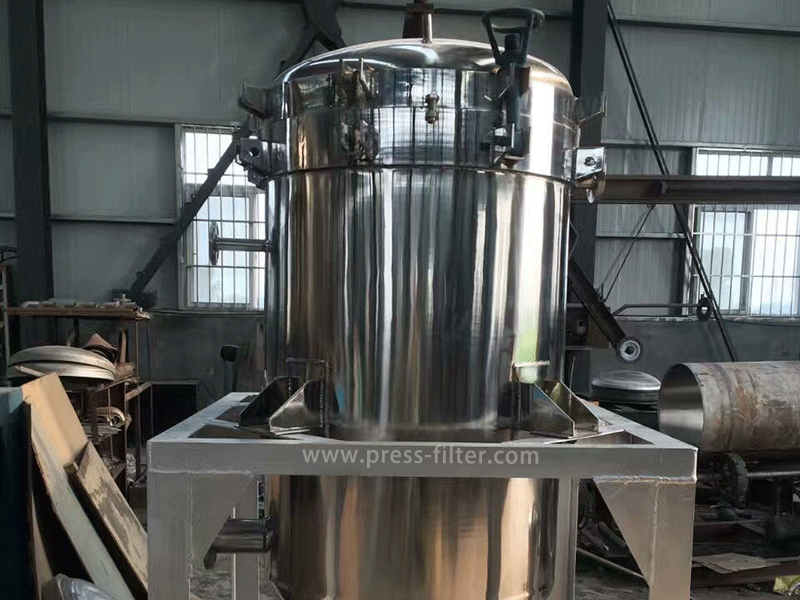
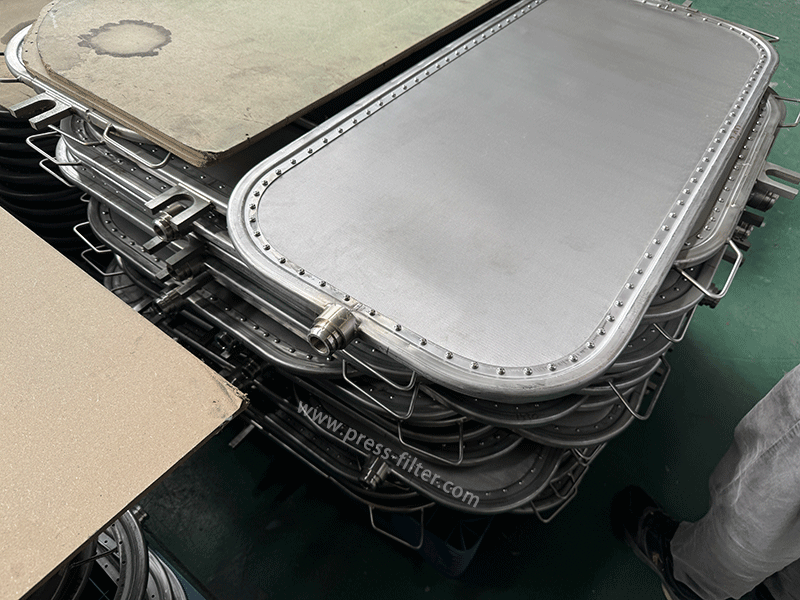
Water glass enters the sealed filter vessel via a feed pump. Inside the unit, multiple filter leaves are arranged, each constructed from five layers of mesh. Driven by the pumping pressure, the water glass flows from the exterior of the leaves toward their interior.
Solid particles in the liquid are trapped on the surface of the filter leaves, while the filtered water glass enters the internal flow channels, collects in the discharge manifold, and is then drained out. As filtration proceeds, the retained impurities gradually form a filter cake on the surface of the leaves.
Once the filter cake has formed, it also participates in the filtration process, effectively capturing finer particles.
Consideration of Filter Aids
For sodium silicate containing very fine particles that tend to clog the filter mesh, the use of filter aids may be considered depending on specific filtration requirements.
A common practice is to establish a pre-coat layer on the surface of the filter leaves prior to the actual filtration process. This helps prevent fine particles from directly entering the mesh pores and improves the structure of the filter cake, thereby facilitating liquid flow.
For processes requiring strict compositional control, it is necessary to verify beforehand whether the filter aid will affect the final product.
Key Advantages of Leaf Filters for Sodium Silicate
Filtración cerrada
The entire filtration process takes place within a sealed tank, minimizing material leakage and keeping the production area cleaner.
Suitable for filtering fine particles
The combination of the filter screen and the gradually forming filter cake effectively captures fine insoluble matter and suspended impurities in the sodium silicate.
Capable of handling liquids with certain viscosities
By appropriately selecting the filtration area, operating temperature, and feed system, leaf filters can be used for chemical liquids with a certain degree of viscosity, such as sodium silicate (water glass).
Convenient discharge of filter cake
At the end of the filtration cycle, the filter cake can be dislodged from the surfaces of the filter leaves using vibration or a mechanical discharge mechanism and then removed from the bottom of the unit. This method is far better suited for industrial-scale production than the frequent manual dismantling of filter elements.