
 Spanish
  English
  French
  Turkish
  Russian
 Application of Leaf Filters in Syrup Filtration
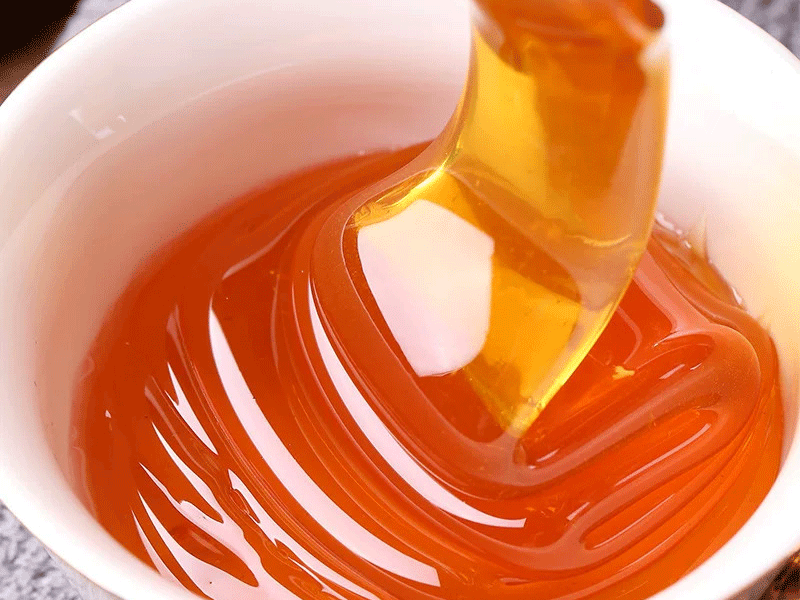
In processing sugar, starch-based sweeteners, beverages, and food products, syrup typically requires clarification and fine filtration to remove suspended particles, minute impurities, and residual solids from earlier processing stages.
Given syrup’s inherent viscosity—and the fact that its fluidity decreases significantly at lower temperatures—filtration requires equipment that offers high precision while ensuring process stability, maintaining appropriate flow rates, and minimizing filter media clogging.
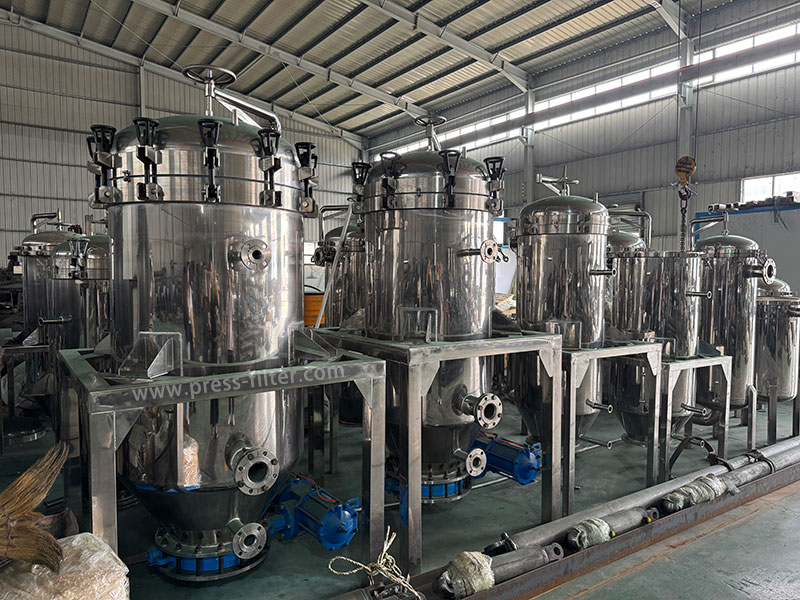
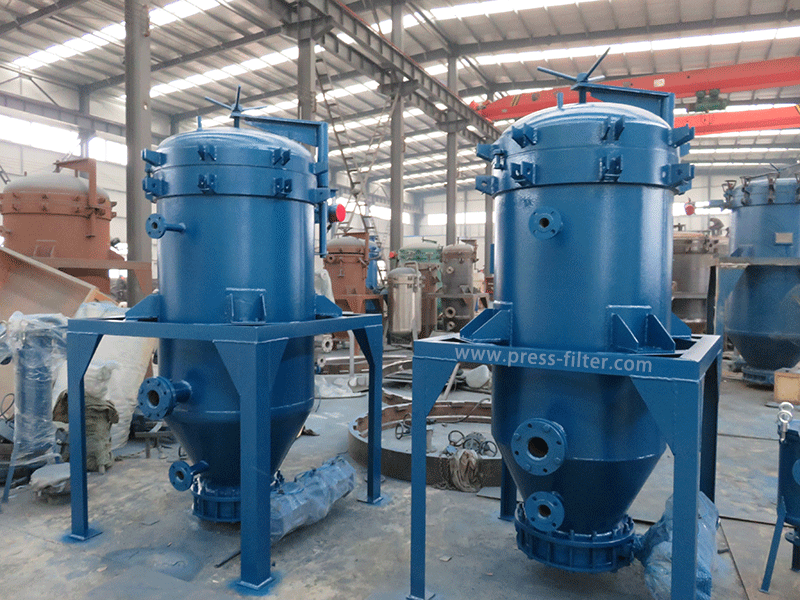
Leaf filters are a type of enclosed filtration equipment commonly used for such applications.
Key Challenges in Syrup Filtration
Compared to typical low-viscosity liquids, syrup filtration presents several distinct challenges.
- First, syrup has high viscosity; particularly at lower temperatures, reduced fluidity directly impacts filtration speed.
- Second, impurity particles in the syrup can be quite fine, making it difficult to achieve consistent clarity using standard filter screens alone.
- Additionally, some materials may contain colloids or fine impurities prone to clogging the filter media, causing filtration resistance to rise rapidly.
The Effect of Syrup Temperature on Filtration Efficiency
Temperature is a critical parameter during the syrup filtration process. At lower temperatures, syrup viscosity rises and flow resistance increases; consequently, even if the filtration pressure remains constant, the volume of liquid passing through the filter bed per unit of time decreases.
Therefore, within the limits of the process, moderately increasing the syrup temperature generally helps reduce viscosity and improve filtration speed. A double-walled structure may be used for thermal insulation to prevent the syrup temperature from dropping too low.
Working Principle of Leaf Filters for Syrup Filtration
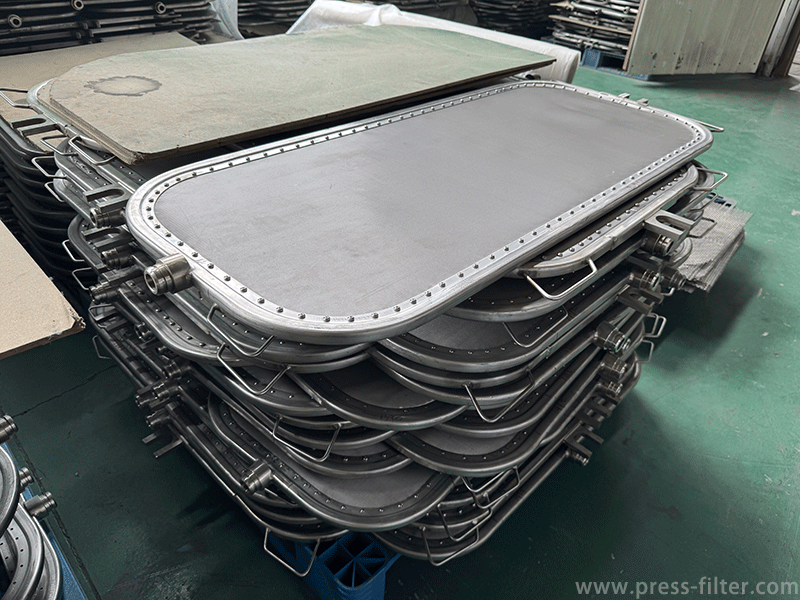
Leaf filters utilize pressure generated by a feed pump to force syrup through the filtration medium covering the filter leaves. Solid impurities in the syrup are trapped on the surface of the leaves, while the filtered, clear liquid enters the interior of the leaves and is discharged through the collection channels.
As filtration proceeds, the impurities on the leaf surfaces gradually form a filter cake. This cake layer not only traps solid particles but also contributes to the ongoing filtration process; consequently, in many syrup filtration applications, filtration performance improves as a stable filter cake layer is established.
For syrups containing a high concentration of fine particles, relying solely on a metal filter screen may sometimes fail to achieve the desired level of clarity. In such cases, filter aids—such as diatomaceous earth or perlite—can be added in accordance with process requirements to form a uniform pre-coat on the surface of the filter leaves.
This pre-coat helps capture finer particles and prevents them from directly entering the screen’s apertures, thereby slowing the rate of screen clogging.
Advantages of Leaf Filters for Syrup Filtration
Filtración cerrada
The filtration process takes place within a sealed vessel, minimizing contact between the material and the external environment while reducing the risk of leakage and the ingress of external contaminants.
Suitable for fine filtration
Filtration is achieved through the combined action of the filter mesh, a pre-coat layer, and the subsequently formed filter cake; this effectively removes fine suspended solids and enhances the clarity of the filtered syrup.
Capable of handling high-viscosity liquids
Processing efficiency for high-viscosity syrups can be optimized by carefully controlling filtration temperature, feed pressure, and filtration surface area.
Convenient solids discharge
Upon completion of filtration, the filter cake can be dislodged from the filter leaves and discharged via vibration, mechanical mechanisms, or other structural means. This reduces downtime between filtration cycles compared to manual disassembly of filter plates for cleaning.
Sanitary-grade materials
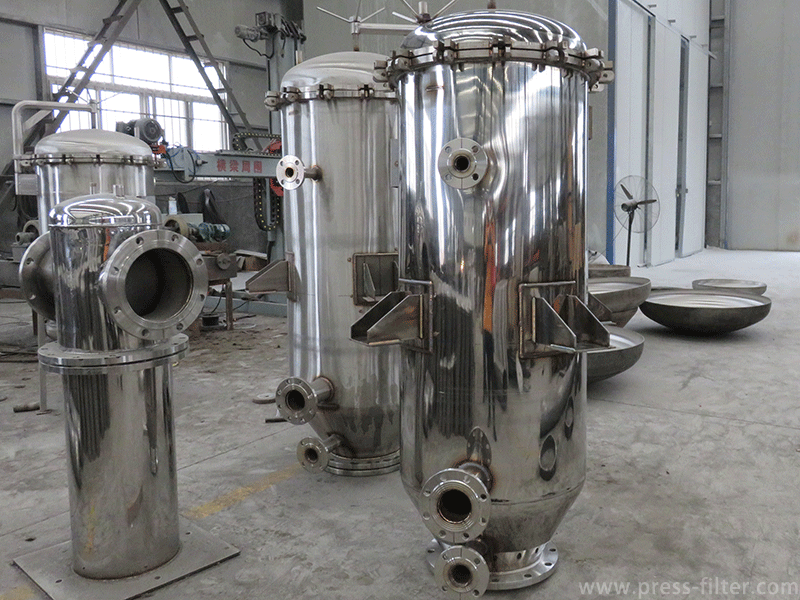
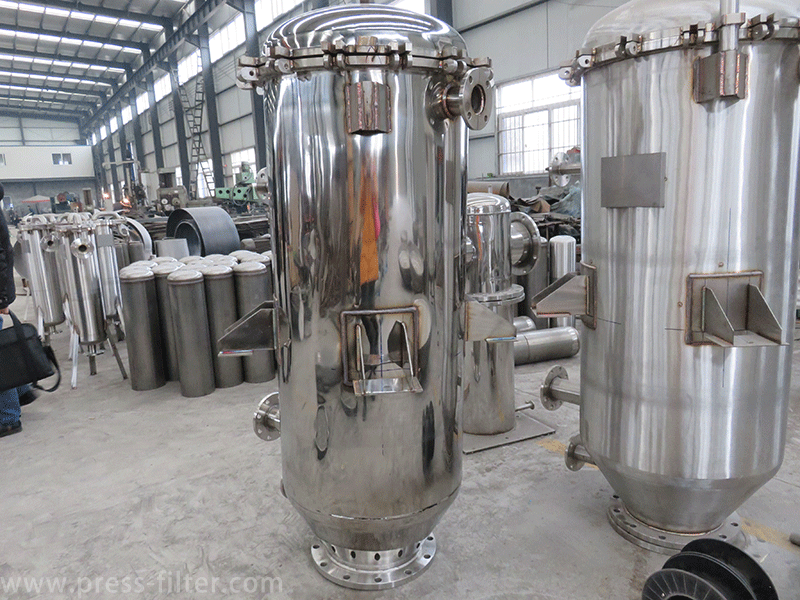
For food-grade syrup filtration, components in contact with the material—such as the vessel, filter leaves, and piping—are typically constructed from stainless steel, with seals and surface finishes selected to meet food industry standards.
How to Select the Right Leaf Filter
For syrup filtration projects, it is recommended to confirm several key parameters before selecting the equipment:
Syrup type, hourly processing capacity, operating temperature, viscosity, solids content, filtration precision, and whether filter aids are required.
By properly configuring the filtration area, filter screens, and feed system, a leaf filter can maintain stable processing capacity while ensuring filtration precision. Please contact us for further details.