
 Spanish
 English
 French
 Turkish
 Russian
Condiciones de operación aplicables para prensas de filtro de flujo abierto y de flujo oculto
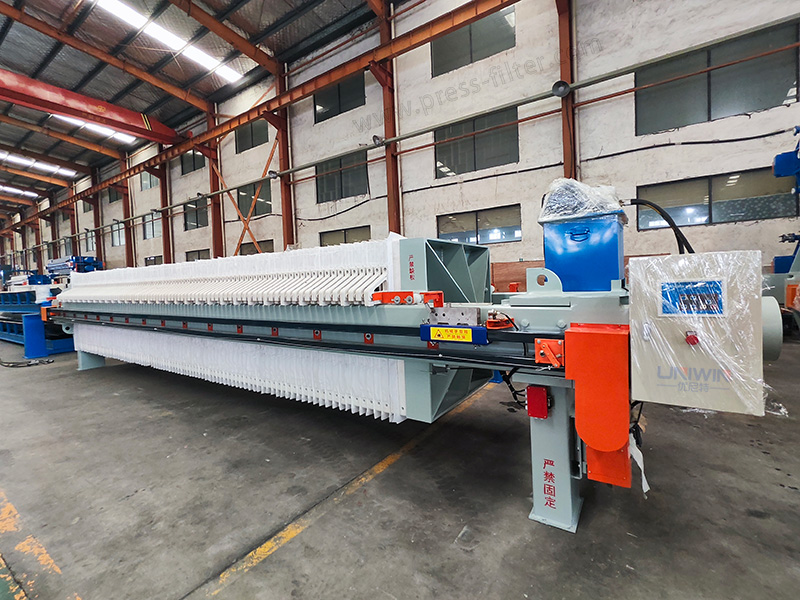
The filter press is a core piece of equipment for industrial solid-liquid separation. Based on how the filtrate is discharged, filter presses are categorized into two main types: open-flow and hidden-flow. Although the structural differences between the two may seem minor, they directly affect operational safety, efficiency, and maintenance costs. This article examines their operating principles and systematically analyzes the suitable operating conditions and key selection criteria for both types.
Operating Principles and Structural Differences
The core operating process of a filter press is as follows: material is pumped into the filter chambers, where, under pressure, the liquid phase passes through the filter cloth—becoming filtrate that is discharged—while the solids are retained to form a filter cake. The fundamental difference between the two types lies in the path through which the filtrate is discharged.
Open-Flow Filter Press
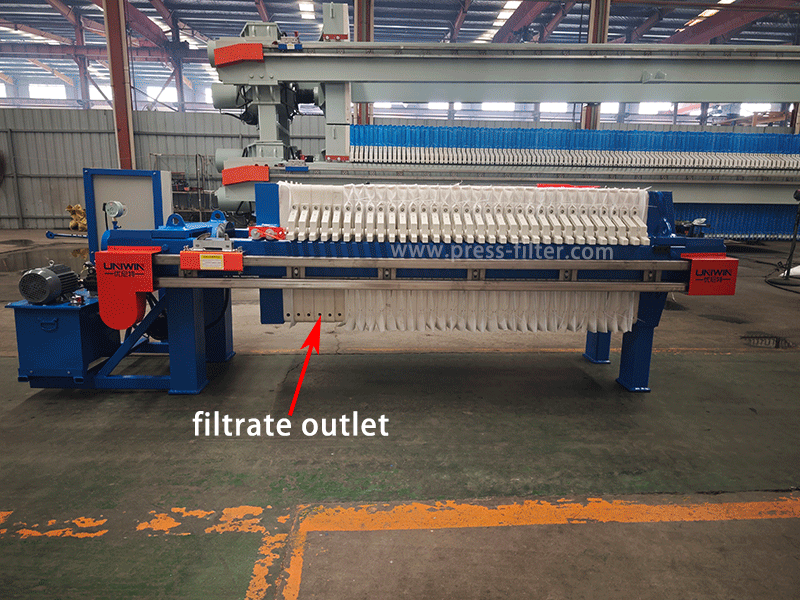
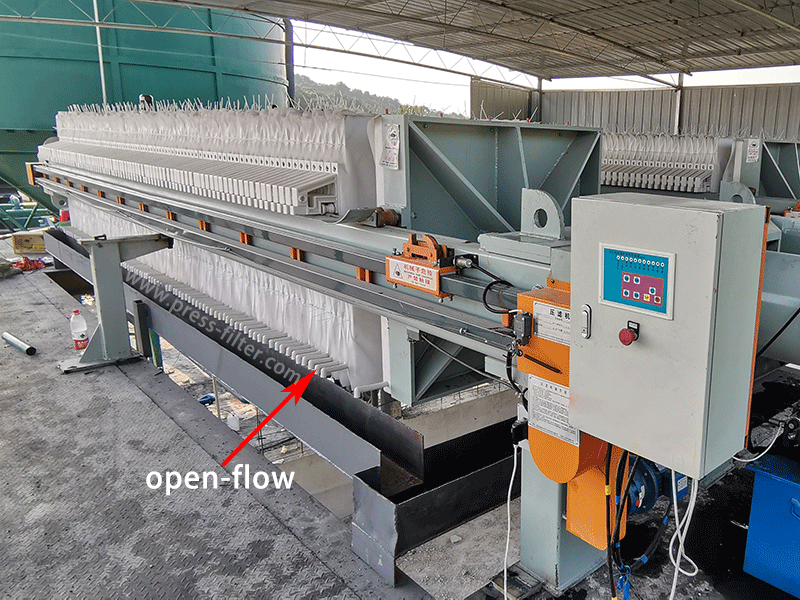
- Each filter plate is equipped with an individual discharge nozzle at the bottom; the filtrate flows directly out of these nozzles and is visible to the naked eye.
- There is no centralized piping system, resulting in a relatively simple structure.
- The clarity and flow rate of the filtrate can be monitored for each individual plate.
- If a filter cloth is found to be damaged, the corresponding nozzle can be shut off individually, allowing the operation to continue.
Hidden-Flow Filter Press
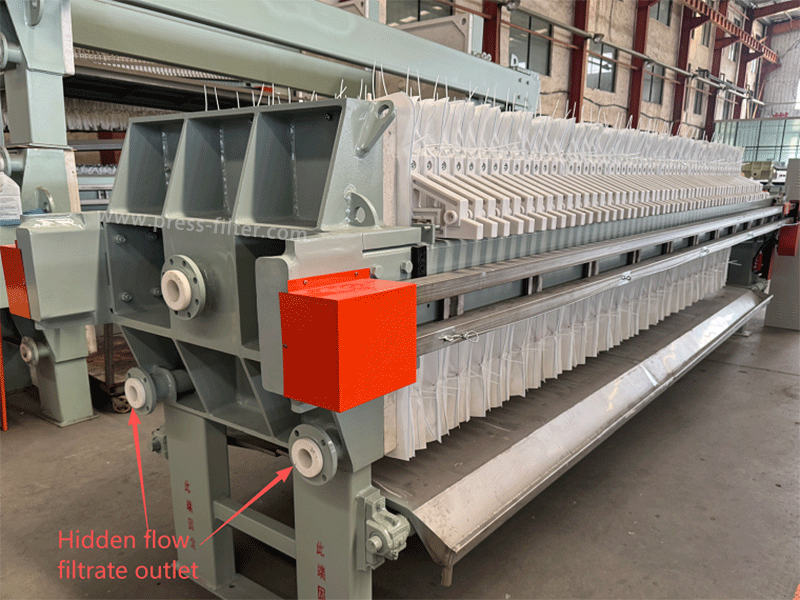
- Internal filtrate discharge channels are provided beneath each filter plate; the filtrate is collected through these enclosed channels into a main manifold and then discharged.
- Fully enclosed piping system; the filtrate is never exposed to the outside.
- Individual filtrate status from each plate cannot be directly observed.
- Excellent pipeline sealing; suitable for specialized materials.
Operating Conditions for Open-Flow Filter Presses
The open-flow configuration is the standard liquid-discharge method for filter presses and the most widely used type. Its primary advantage is its transparency: operators can observe the filtrate from each individual filter plate in real time, allowing for the rapid identification of any operational issues.
Applicable industries
- Wastewater treatment and sludge dewatering
- Metallurgy and mineral processing
- Ceramics and construction materials
- Food and agricultural product processing
- General chemical manufacturing
Selection criteria
An open-flow filter press is the preferred choice when the filtrate consists of a standard aqueous solution—free from risks of volatility, toxicity, or corrosivity—and where the site does not require a fully enclosed system. With lower procurement costs, ease of maintenance, and straightforward troubleshooting, it serves as the optimal solution for the vast majority of conventional operating conditions.
Applications for Hidden-Flow Filter Presses
The defining feature of a hidden-flow filter press is its fully sealed piping system, which ensures that the filtrate never comes into contact with the external atmosphere. This makes it ideal for specialized operating conditions that demand high standards of safety, cleanliness, and environmental compliance.
Applicable industries
- Filtration of volatile materials
- Handling of toxic or hazardous substances
- Filtration of corrosive materials
- Pharmaceuticals and fine chemicals
- Processes requiring the recovery and reuse of filtrate
- Facilities with strict environmental control requirements
Selection considerations
A hidden-flow filter press should be selected when the filtrate is volatile, toxic, corrosive, or odorous; when it requires clean, sealed collection and recovery; or when the facility is subject to stringent environmental regulations. It should be noted that because the filtrate from individual filter plates cannot be directly observed, troubleshooting can be more challenging; therefore, the system should be equipped with pressure and flow monitoring instruments to assist in diagnostics.
Recomendaciones de selección
- If the filtrate contains volatile solvents, toxic components, highly corrosive substances, or generates irritating odors, a “closed-flow” (concealed-discharge) design must be selected; for standard, non-hazardous materials, an “open-flow” (exposed-discharge) design is sufficient.
- Is the production facility located in an area subject to strict environmental regulations? Is it necessary to prevent operators from coming into contact with the filtrate? If the answer to either question is “yes,” a closed-flow design is the mandatory choice.
- For filtrates with recovery value (such as solvents or mother liquors), the closed-flow design—which channels the filtrate into a centralized piping system—is naturally well-suited for recovery processes.
- Open-flow equipment offers lower procurement costs and simpler maintenance. While closed-flow equipment requires additional instrumentation for monitoring, it provides superior safety and better compliance with environmental regulations during long-term operation.